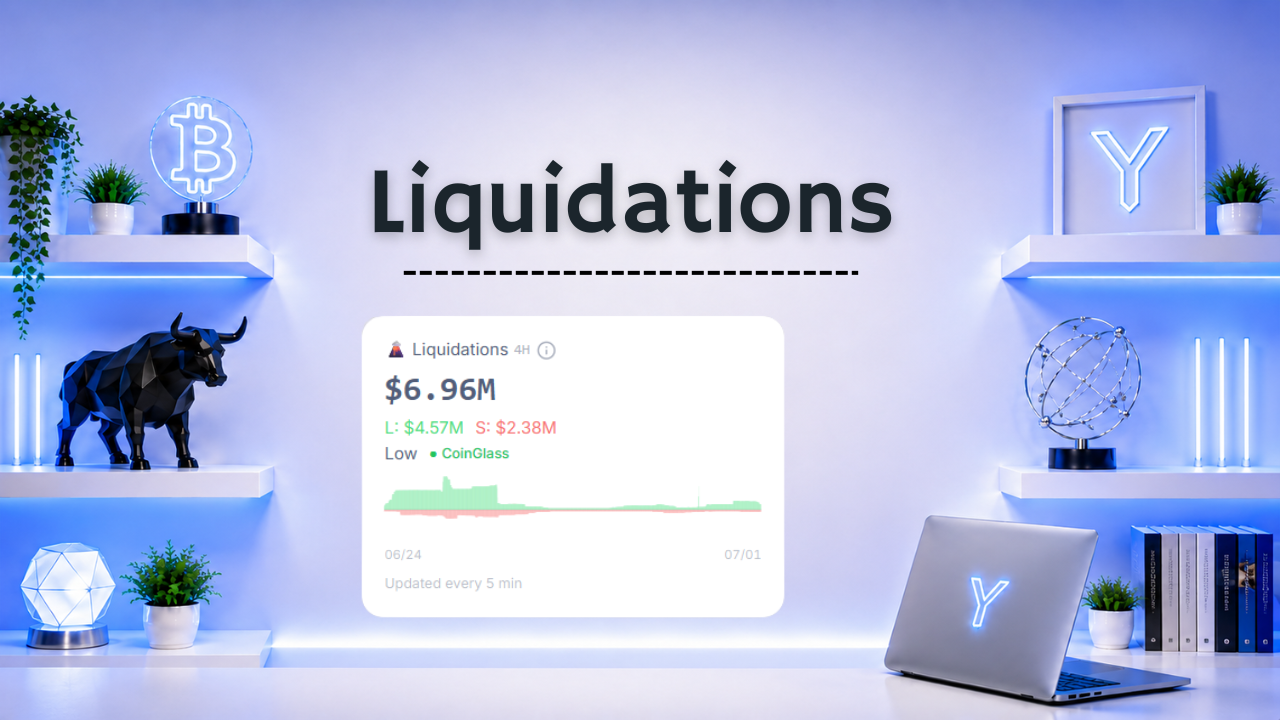
⚡ Liquidations – When the market forces the exit
Imagine a trader using a rubber band.
The harder he pulls with leverage, the more the elastic stretches. If the price goes too far against it, the elastic breaks. In crypto markets, this breakout is called aliquidation.
🎯 What is this indicator used for?
Liquidations show where leveraged positions have been closed automatically.
They help us understand why certain movements suddenly become very rapid.
- 🟢Shorts sold out: sellers are forced to buy back, which can accelerate the rise.
- 🔴Long liquidated: buyers are forced to sell, which can accelerate the decline.
Liquidations are therefore not only a consequence of the movement.
They can also become the fuel that prolongs the movement.
🧠 How to interpret them?
🟢 Lots of shorts liquidated
When many shorts are liquidated:
- The price often rose quickly.
- Short sellers were trapped.
- The increase can accelerate through forced redemptions.
🔴 Lots of long liquidations
When many longs are liquidated:
- The price often dropped quickly.
- Leveraged buyers were forced out.
- The decline can be amplified by forced sales.
After a big wave of liquidations, the market can sometimes breathe because some of the leverage has been cleaned out.
⚠️ What you should never do
You should not enter a trade just because there have been liquidations.
A liquidation indicates that a violent movement has taken place. It does not guarantee that the movement is complete. The market can rebound after a cascade, but it can also continue if pressure remains high.
🤝 What to combine them with?
⚡ Risk areas
Liquidations take on more meaning when they occur nearrisk areas.
A broken support with lots of long sellouts doesn’t have the same meaning as a single isolated move.
💸 Funding
An extreme Funding can indicate that one side of the market is too crowded. Liquidations then show whether that side has started to be forced out.
📈 CVD
The CVD helps to see if the liquidation is accompanied by real buying or selling pressure.
💡 Yapuka advice
Liquidations show where leverage has exploded.
They help to understand sudden accelerations, but they must always be placed in context.At Yapuka, we use them to identify areas where the market has cleaned up some of the risk, or conversely where a cascade can still continue.