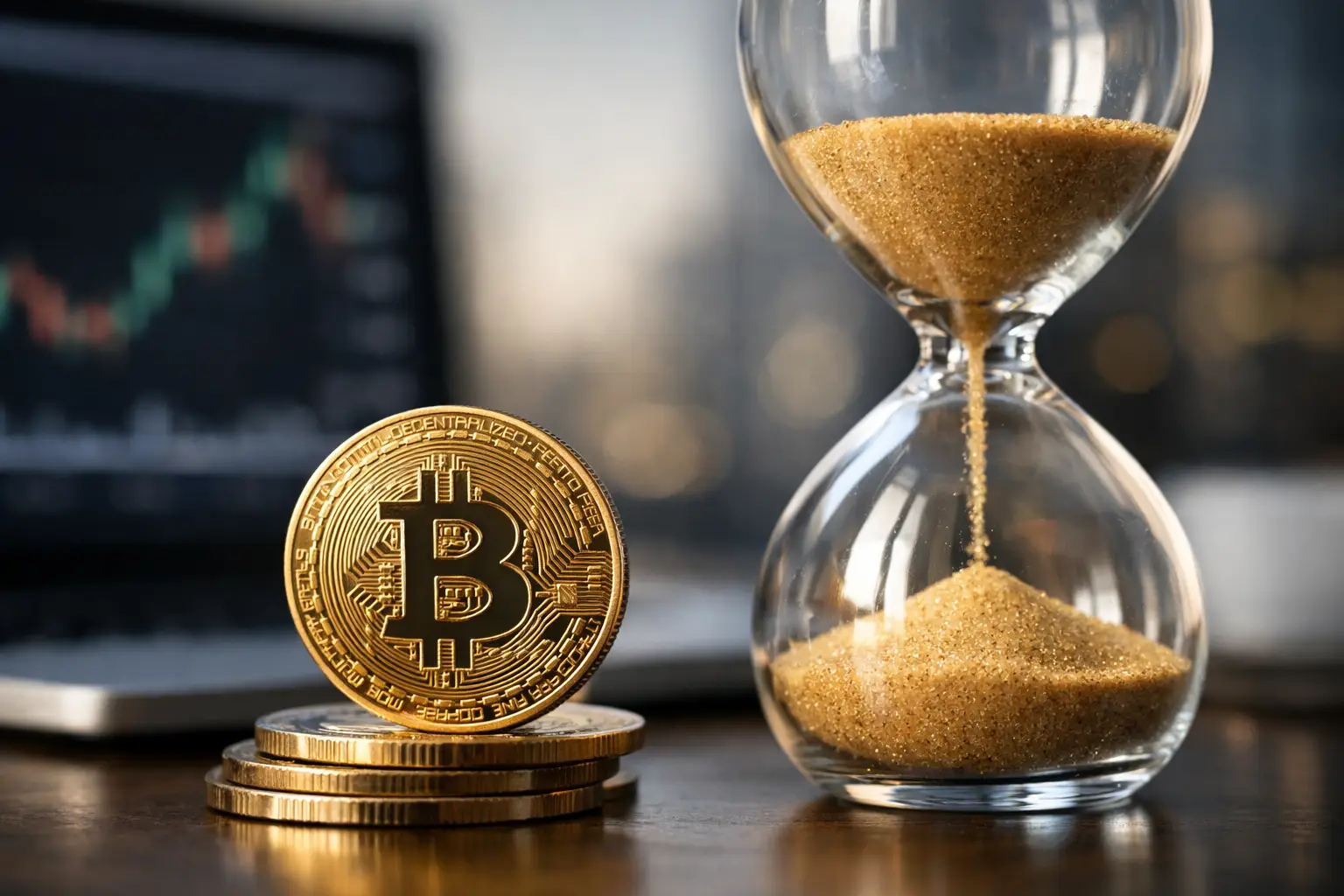
When Bitcoin comes back into conversations, the same question almost always arises at the wrong time: is it too late for Bitcoin? Usually, we ask ourselves this after a price surge, when the price already seems far away, or after a drop, when doubt takes over. But the real issue isn’t whether you missed “the” perfect moment. The real question is whether Bitcoin still has a logical place in a long-term strategy today.
If you’re investing with a multi-year horizon, the answer is neither an automatic yes nor a definite no. It depends on your personal timing, your method, and above all, your ability to handle volatility without turning every market move into extra mental stress.
Is It Too Late for Bitcoin If the Price Has Already Risen a Lot?
This is the most common objection. Many look at the current price and compare it to Bitcoin at 100 euros, 1,000 euros, or 10,000 euros. Naturally, everything seems “too expensive” in comparison. But this reasoning has a simple flaw: it confuses past price with future potential.
An asset isn’t too late just because it has already gone up. It’s potentially too late if the investment thesis is broken, if the risk is no longer acceptable, or if your time horizon doesn’t match the asset’s behavior. That’s not the same thing.
In Bitcoin’s case, many long-term investors still see it as a rare, liquid, global asset that is increasingly integrated into macroeconomic discussions. This guarantees nothing. However, it explains why some still believe a measured exposure can make sense, even after several bull cycles.
You also have to accept a less comfortable reality: no one knows if your entry point today will be excellent, average, or poor in the short term. What you can do, though, is avoid the classic mistakes that cost dearly over several years.
The Wrong Question: “Did I Miss the Train?”
This train analogy pushes people to invest in a rush. But long-term investing rarely works well under pressure. When you think you’ve missed an opportunity, you tend to jump in too quickly, too heavily, without a plan. That’s often where regrets begin.
A more useful question would be: “Does Bitcoin deserve a reasonable place in my portfolio today?” In other words, you’re not trying to guess the best possible price. You’re trying to build a decision that is sustainable, coherent, and can be followed over time.
This is especially true for individual investors who neither have the time nor the desire to follow the market every day. A plumber, electrician, landscaper, mechanic, hairdresser, beautician, or renovation entrepreneur doesn’t need to become a macro analyst to invest properly. They need a clear read of the context, a simple framework, and a plan they can stick to without spending their evenings on it.
What Makes You Think It’s Too Late
The feeling of arriving after everyone else rarely comes from data. It mostly comes from three very human biases.
The first is anchoring to the past. You think of Bitcoin ten years ago, then compare it to today. Naturally, it feels like you’re paying too much. But you’re not buying the past. You’re buying future exposure, with its risks and opportunities.
The second is the fear of an immediate drop. Many postpone their decision, waiting for “a better entry point.” The problem is, this wait can last months, sometimes years. And during that time, no strategy is built.
The third is noise. Between extreme opinions, contradictory forecasts, and constant alerts, it becomes hard to distinguish what really matters. This is precisely where a structured approach, assisted by AI, becomes valuable: not to predict the future, but to filter information and help you stay focused on useful signals.
Is It Too Late for a Beginner to Invest in Bitcoin?
For a beginner, the real difficulty isn’t arriving too late. It’s arriving without a method. Bitcoin can still make sense for someone starting today, provided they follow three simple rules.
First, don’t invest an amount you can’t handle seeing fluctuate significantly. Bitcoin remains volatile. Even with long-term conviction, you must be ready to endure significant drops without panicking.
Next, avoid emotional entry. Investing after a big surge because everyone is talking about it, or selling after a drop because everything seems lost, is the shortest path to a bad experience.
Finally, think in terms of allocation, not fantasy. For many profiles, the right starting point isn’t “put everything in Bitcoin,” but defining a coherent share within a global portfolio. This share depends on your income, your horizon, your risk tolerance, and your other assets.
The Perfect Timing Rarely Exists
It’s a frustrating but useful truth: the perfect timing is mostly obvious in hindsight. In the moment, it often feels uncomfortable. Either the market has already risen and you’re afraid of buying too high, or it has dropped and you’re afraid it will keep falling.
Waiting for absolute certainty often means never acting. For a long-term investor, the question then becomes: how do you move forward without depending on perfect timing?
The simplest answer is often progressive investing. Instead of going all in at once, you spread your purchases over time. This doesn’t always maximize theoretical performance, but it reduces the psychological impact of poor timing. And in practice, an imperfect but consistent strategy is better than an excellent plan abandoned at the first sign of stress.
What to Consider Before Investing
Before asking yourself if it’s too late for Bitcoin, ask yourself a few concrete questions.
Why do you want to buy Bitcoin? If the answer is only “because it’s going up,” the foundation is weak. If the answer is tied to a long-term conviction about scarcity, diversification, or protection against certain monetary risks, the reasoning is already more solid.
How long are you willing to stay invested? Bitcoin isn’t a miracle product for the next six weeks. It fits better into a multi-year logic.
What will you do if the market drops by 20%, 30%, or 50%? This question matters more than your current enthusiasm. A strategy is only credible if it holds up during uncomfortable phases.
How will you monitor your position without becoming obsessed? This is often the forgotten point. Many enter the market, then find themselves trapped in a constant flow of information, alerts, and contradictory analyses. They don’t lack information. They have too much.
The Value of a Simplified Market Overview
This is where a tool like Yapuka Holder can be useful. Not to promise you a future price. Not to add more noise. But to turn complex data into a clear, understandable, and actionable overview.
When you invest in Bitcoin alongside a demanding job, the challenge is often simple: keep control without having to analyze everything yourself. You want to understand the cycles, spot underlying trends, track your portfolio, and see the signals that matter, without spending hours sorting through sources. Good use of AI serves exactly this purpose: to reduce mental load, not add another layer of complexity.
So, Is It Too Late?
If your idea is to get rich quick after seeing a recent surge, you may be arriving at the wrong time for the wrong reasons. If your goal is to build a long-term, gradual exposure suited to your profile, it’s not necessarily too late.
Bitcoin is no longer an unknown niche. That’s true. Its potential is probably no longer what it was in its earliest days. That’s also true. But between “it’s no longer the beginning” and “it’s too late,” there’s a big difference.
Investing late compared to the pioneers is not the same as investing poorly. What matters most isn’t being the first to arrive. It’s arriving with a method you can still follow in a year, in two years, and through the next tough cycle.
The best starting point isn’t always a low price. It’s often a clear, simple decision that you can stick with over time.