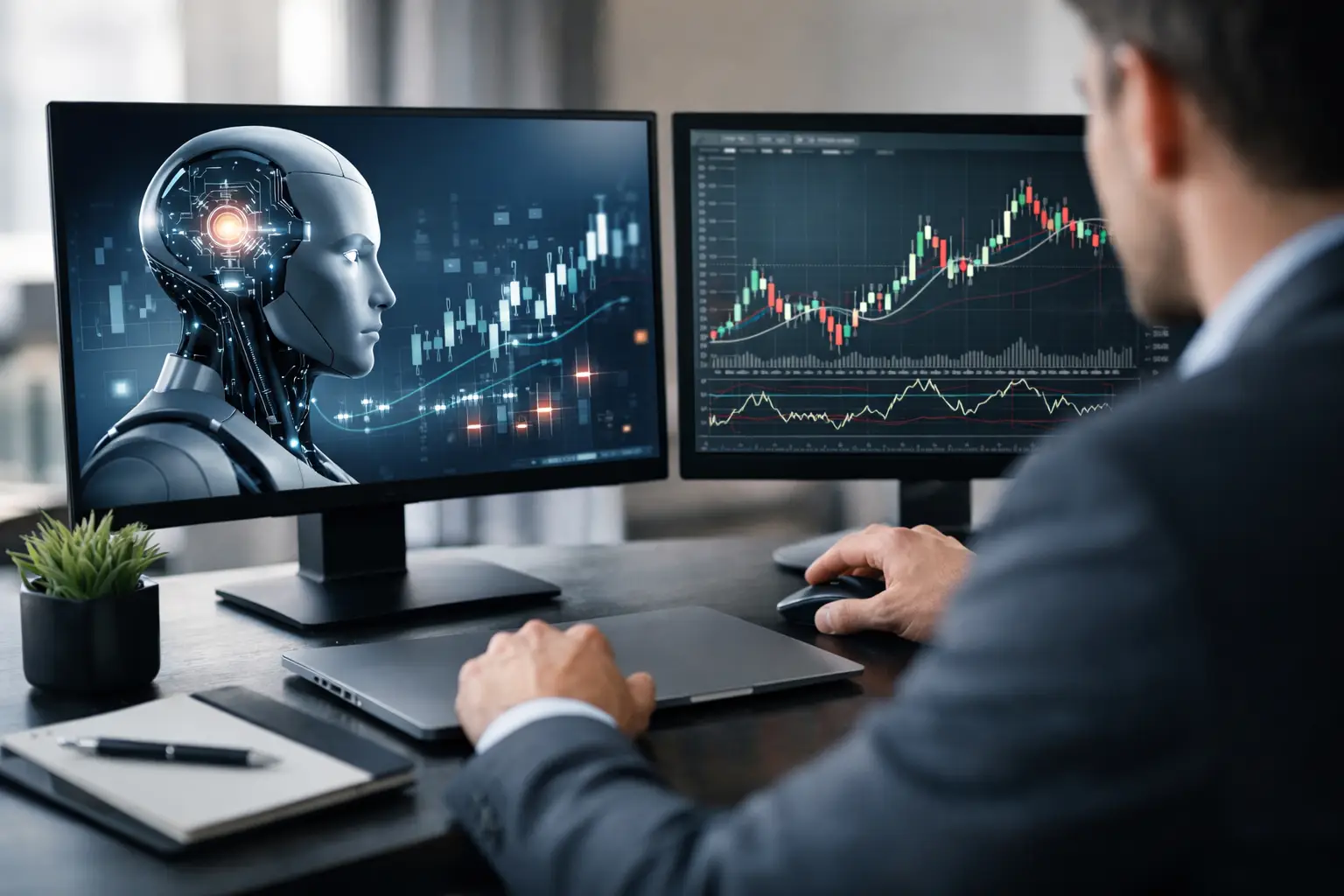
A chart accelerating, a crypto alert, and ten contradictory indicators: that’s often when an AI trading tool review becomes useful. Not to find a machine that “knows” what the market will do tomorrow, but to distinguish a serious analysis assistant from a tool that turns complexity into false certainty. For a retail trader, the right software does not replace a method or risk management. It makes information more readable and decisions more disciplined.
AI Trading Tool Review: What a Good Tool Should Really Do
The term AI covers very different realities. Some tools use statistical models to detect trends or anomalies. Others summarize financial news, rank assets according to several criteria, or answer questions about a portfolio. The most advanced solutions combine market data, technical indicators, fundamental information, and sentiment analysis.
The first criterion is not whether the tool displays the word “artificial intelligence.” You need to understand which specific task it automates. Can it spot a volatility breakout? Compare the relative strength of several assets? Explain why an alert was triggered? Highlight an important technical level? The more defined the function, the easier it is to evaluate.
A useful tool should also present its results intelligibly. A recommendation without context, like “buy now,” offers little educational value and may encourage impulsive decisions. Conversely, a good assistant indicates the data observed, the relevant time frame, converging signals, and what would invalidate the scenario. This transparency helps the user stay in control.
AI can be particularly effective at processing a volume of information that an individual cannot track alone. This includes monitoring dozens of markets, sorting important announcements, comparing trends, or detecting unusual movements. Its main advantage is often time saved, not a magical ability to predict prices.
Criteria for Giving a Reliable Review of a Tool
Before subscribing to a platform, it’s best to evaluate it with a simple checklist. Data quality comes first. Delayed prices, incomplete volumes, or poorly cleaned historical data can produce attractive but barely usable analyses. The tool should specify the markets covered, update frequency, and, when relevant, the sources used.
The second question concerns the method. An algorithm doesn’t need to reveal all its code to be credible, but its general functioning should be understandable. The user should know if the signal is based on moving averages, on-chain data, sentiment analysis, statistical detection, or a combination of factors. A black box promising exceptional results without explaining its limits deserves great caution.
The ability to configure the tool is also crucial. A long-term investor does not analyze the same data as an intraday trader. Similarly, relevant volatility thresholds for bitcoin may not suit a defensive stock. Alerts, analysis time frames, watchlists, and indicators should be adjustable to the user’s profile.
Finally, look at the quality of the educational experience. For a beginner, a platform displaying fifty metrics without explanation can increase mental load instead of reducing it. The best tools define terms, prioritize information, and put each signal in context. They help you learn a method, rather than depend on a notification.
Proof by Results, Not by Screenshots
Performance highlighted in advertising always requires perspective. A screenshot of a winning trade says nothing about loss frequency, fees, risk level, or market conditions. A strategy may have worked very well during a bullish phase and become fragile when volatility changes.
Look instead for verifiable elements: clearly defined test period, fee assumptions, entry and exit rules, comparison with a benchmark index, and drawdown measurement. Even a serious backtest remains a simulation. It depends on past data and can suffer from overfitting: the model then explains yesterday very well but disappoints in anticipating tomorrow.
A balanced review should therefore recognize that no success rate is sufficient on its own. A strategy with fewer apparent gains may be more consistent if it better limits losses and follows a clear risk framework. The regularity of the method matters more than a promise of spectacular performance.
What to Avoid Before Entrusting Your Analysis to AI
Certain signals should make you pause. A promise of guaranteed profits, automatic profitability, or systematic accuracy is not compatible with how financial markets really work. Prices reflect unforeseen events, political decisions, liquidity movements, and human reactions that cannot be reduced to a fixed formula.
Also beware of platforms that encourage you to connect a brokerage account or crypto wallet without clearly explaining the permissions requested. Analysis can often be performed in read-only mode. If the tool allows order execution, security rules, amount limits, and the ability to disable automation must be perfectly clear.
Data protection deserves the same attention. A tool may need to know your assets or investment horizon to personalize its analyses. That does not mean it should access unnecessary sensitive information. Check what is collected, what is stored, and the controls offered to the user.
Finally, avoid multiplying indicators just because they are available. Too much information can create an illusion of precision. If an AI provides a trend, a sentiment score, a probability, and five technical alerts, ask yourself which data would really change your decision. If the answer is unclear, simplify your dashboard.
A Simple Method to Test the Tool Without Unnecessary Risk
The trial period should be used to observe the tool, not to blindly follow its suggestions. Start by choosing a limited universe, for example five assets you already know. Then define what you want to measure: alert quality, clarity of explanations, time saved, or relevance of detected levels.
For several weeks, record the signals in a journal. Note the market context, the time frame indicated by the tool, your interpretation, and what happened next. It’s not just about counting correct signals. Also observe false positives, periods when the tool detects nothing, and situations where its analyses arrive too late for your trading style.
If you want to test a strategy, first use a demo account or a very limited position size. Plan in advance the acceptable loss level and the conditions that will make you stop the test. This discipline protects you as much from algorithm flaws as from your own confirmation bias.
AI Is a Copilot, Not the Manager of Your Capital
The best use of an AI tool is to delegate repetitive tasks: filtering data, monitoring thresholds, comparing scenarios, or summarizing complex information. The final decision remains tied to your objective, time frame, risk tolerance, and market knowledge. An alert can open a useful question; it should not close your thinking.
This is also the difference between automation and autonomy. Automation executes or organizes a task. Financial autonomy, on the other hand, means understanding the reasons for a decision and taking responsibility for its risk. A good tool strengthens this autonomy when it makes its reasoning visible, accepts uncertainty, and helps you build a consistent routine.
A platform like Yapuka Trader can thus help centralize analysis, spot signals that deserve your attention, and reduce the time spent sorting information. An AI agent or automated tool remains a decision support: it analyzes data and lightens mental load, but never guarantees a profit. The best decision will always be the one you understand, can justify, and whose risk remains compatible with your situation.