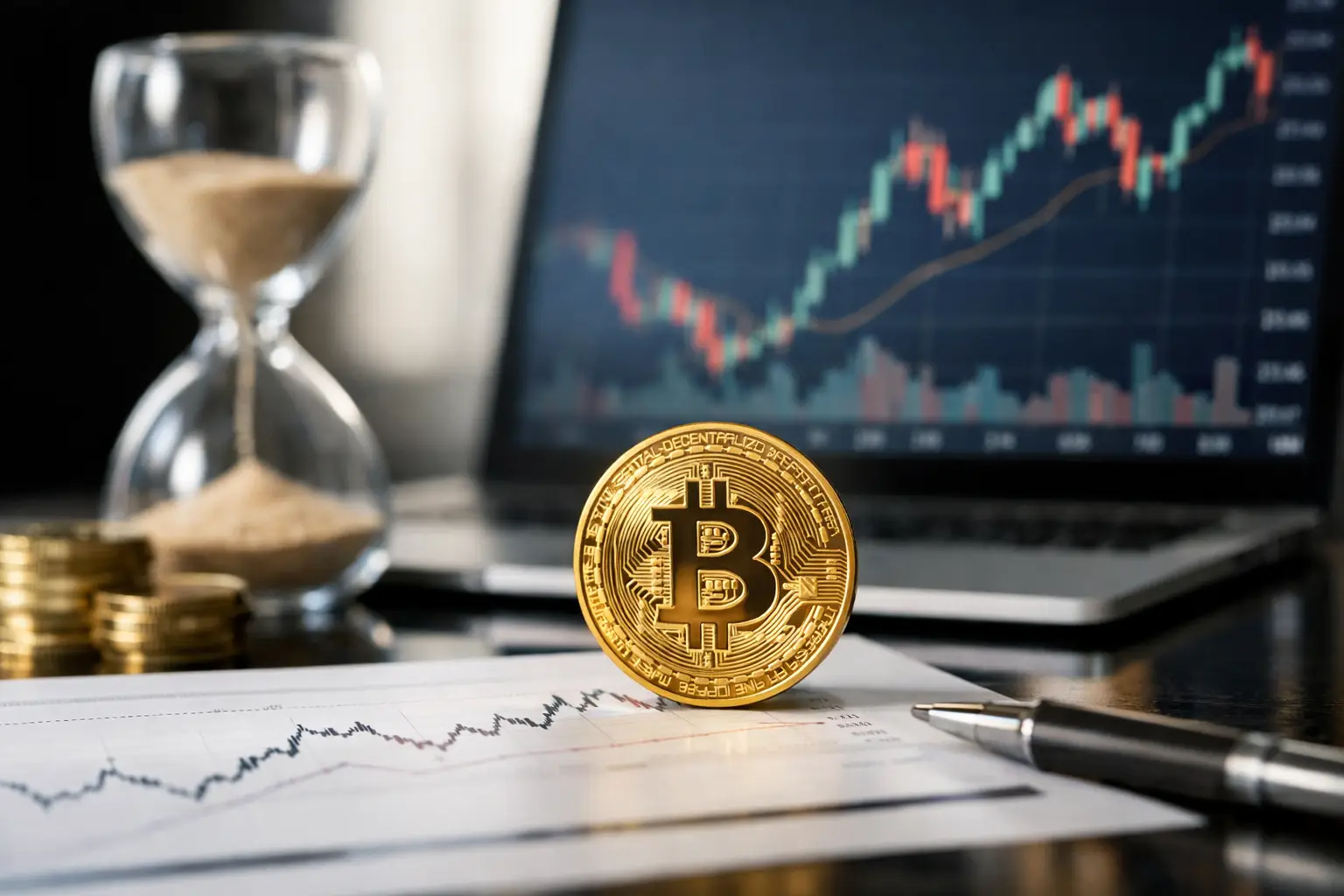
A bitcoin bought at €60,000 can be worth €54,000 just a few days later, then surge again several weeks after. This reality leads many savers to wonder: is bitcoin too volatile to be a serious investment? The short answer is no, as long as you don’t expect what it can’t deliver: a calm, predictable, and drop-free trajectory.
Bitcoin remains a risky asset. But volatility is not just a flaw to endure. It’s also the price of a young, global market still in its adoption phase. For a long-term investor, the real issue is not eliminating fluctuations, but understanding, managing, and preventing them from dictating poor decisions.
Why Bitcoin fluctuates so much
Bitcoin can move sharply because its market reacts quickly to news, buying and selling flows, and the economic context. A central bank announcement, a liquidity crisis, new regulations, or a move by a large investor can change the price within hours.
Its supply is limited, but its price depends on demand at any given moment. When many buyers arrive at once, the price rises quickly. When fear sets in, the drop can be just as fast. On top of that, the market is open continuously, including evenings, weekends, and holidays. It never closes to let investors catch their breath.
This volatility is more visible than that of a savings account or traditional fund. However, it doesn’t mean Bitcoin is incomprehensible. Movements may seem chaotic day-to-day, but they often fit into longer phases: accumulation periods, acceleration, euphoria, correction, then rebuilding.
Is Bitcoin too volatile for your time horizon?
The same drop means different things depending on your timeframe. If you need your money in three months for a project, heavy exposure to Bitcoin can become a source of stress and a real risk. You might be forced to sell at the wrong time.
On the other hand, someone investing gradually with a multi-year horizon can view a drop differently. It’s still uncomfortable, but it doesn’t automatically undermine their plan. That’s the difference between tracking the price every hour and following a strategy.
A plumber, electrician, mechanic, or renovation entrepreneur may not have time to monitor markets between clients. Neither does a hairdresser or beautician. For these investors, the best approach is usually not to try to anticipate every move. It’s to set a reasonable portion of their savings, an investment frequency, and simple rules to follow.
Volatility becomes too high when your allocation keeps you up at night, makes you check the price constantly, or threatens your safety budget. This signal is personal. It doesn’t depend on what a more aggressive investor can tolerate.
Volatility is not the most dangerous risk
Seeing your portfolio drop is tough. Yet, the costliest risk often comes from your reaction to that drop. Selling after a correction out of fear, buying back after a surge out of excitement, then repeating the cycle: this behavior destroys more value than a temporary fluctuation.
Bitcoin imposes a simple rule: don’t invest money needed for daily expenses, emergencies, or near-term projects. Your safety reserve should remain separate. Once this base is set, you can determine what amount would still be acceptable even if it lost significant value for a while.
You must also accept that past performance guarantees nothing. Bitcoin has seen long periods of decline and could see more. Long-term investing doesn’t mean the result is assured. It means your decision is based on a timeframe, conviction, and consistent risk management, not on the next green or red candle.
How to reduce the emotional impact of fluctuations
You can’t control Bitcoin’s price. However, you can control your method. That’s where your leverage lies.
Scheduled investing is often a suitable solution for individuals. Instead of putting in a large sum at once and fearing you picked the wrong day, you invest a fixed amount at regular intervals. This approach doesn’t remove risk or guarantee better returns. It mainly reduces the need to guess the perfect entry point.
Portfolio allocation is just as important. If Bitcoin makes up too much of your wealth, every move will weigh heavily on your mind. A more measured allocation lets you benefit from the asset’s potential without endangering your main goals.
Finally, limit the noise. Price alerts, alarmist headlines, and rushed comments make it feel like you must act immediately. In most cases, a long-term investor benefits from looking less often, but more effectively. A monthly or quarterly review of your strategy is more useful than twenty daily checks.
Follow the right benchmarks, not just the price
Price is necessary, but it doesn’t tell the whole story. To make decisions with more perspective, you need to put Bitcoin in context: market trends, adoption level, liquidity, long-term holder behavior, and macroeconomic environment.
The goal isn’t to become an analyst. The goal is to answer a few useful questions: is the market in a phase of strong euphoria or widespread fear? Does my allocation still match my plan? Am I reacting to solid information or just market noise?
This is exactly what a platform like Yapuka Holder aims to simplify. Instead of browsing dozens of charts and conflicting sources, investors can centralize key signals and follow underlying trends. Artificial intelligence doesn’t predict the future or remove your responsibility. It filters information to reduce mental load and help you keep a clearer view.
When should you reduce your exposure?
Reducing your exposure isn’t necessarily a failure. It can be a healthy decision if your situation changes. A drop in income, a real estate purchase, starting a business, or an upcoming family project can justify a more cautious portfolio.
It can also be useful to rebalance when Bitcoin takes up a much larger share of your wealth than planned. If your strategy was to keep limited exposure and a big rise doubles it, selling some to return to your target can protect your balance. This isn’t trying to guess the top. It’s applying a rule set in advance.
Conversely, reducing your exposure just because the price has dropped requires more thought. If your financial needs, timeframe, and conviction haven’t changed, the question is less “is the market dropping?” and more “does my plan still fit?”
A simple strategy is better than a quick reaction
Bitcoin is volatile, and it will likely stay that way. Looking for a version of Bitcoin without strong swings is like looking for a different asset. The right question isn’t whether every drop is normal. It’s whether your strategy lets you get through it without making a decision you’ll regret.
Keep a suitable allocation, invest only what you can set aside, follow useful indicators, and allow yourself to do nothing when the noise gets too loud. Clarity doesn’t come from a perfect prediction. It comes from a plan simple enough to follow, even when the market is turbulent.