You bought Bitcoin for the long term, not to anxiously monitor your phone. Yet, knowing how to secure your bitcoins quickly becomes a source of doubt: should you leave them on an exchange, buy a hardware wallet, write down a secret phrase, enable multiple protections? The good news is that serious security doesn’t require you to become a technician. It mainly requires a few clear decisions, applied methodically.
The key principle can be summed up in one sentence: your bitcoins are not stored in an app or on a USB stick. They are controlled by cryptographic keys. Whoever controls the private key, or the recovery phrase that can recreate it, controls the bitcoins. Your goal is simple: protect this access, without creating an unmanageable system for yourself.
Understand What You Are Really Protecting
When you see a BTC balance on an exchange, the platform usually holds the keys for you. This is convenient for buying, selling, or quickly converting. But this comfort comes with a trade-off: you depend on the security and availability of that company. In case of hacking, account freeze, or operational issues, you do not directly control access to your funds.
Conversely, holding your bitcoins yourself, also called self-custody, gives you direct control. You don’t need anyone’s permission to move your funds. However, you become responsible for your own backup. Losing your recovery phrase can mean permanently losing access to your bitcoins. There is no “forgot password” button.
For a long-term investor, the right choice depends on the amount, your comfort level, and your intended use. A small sum for regular purchases can temporarily stay on a reputable and well-protected platform. An amount you plan to keep for several years often deserves a personal storage solution. The idea is not to seek perfection, but to avoid a single incident compromising everything.
How to Secure Your Bitcoins With a Hardware Wallet
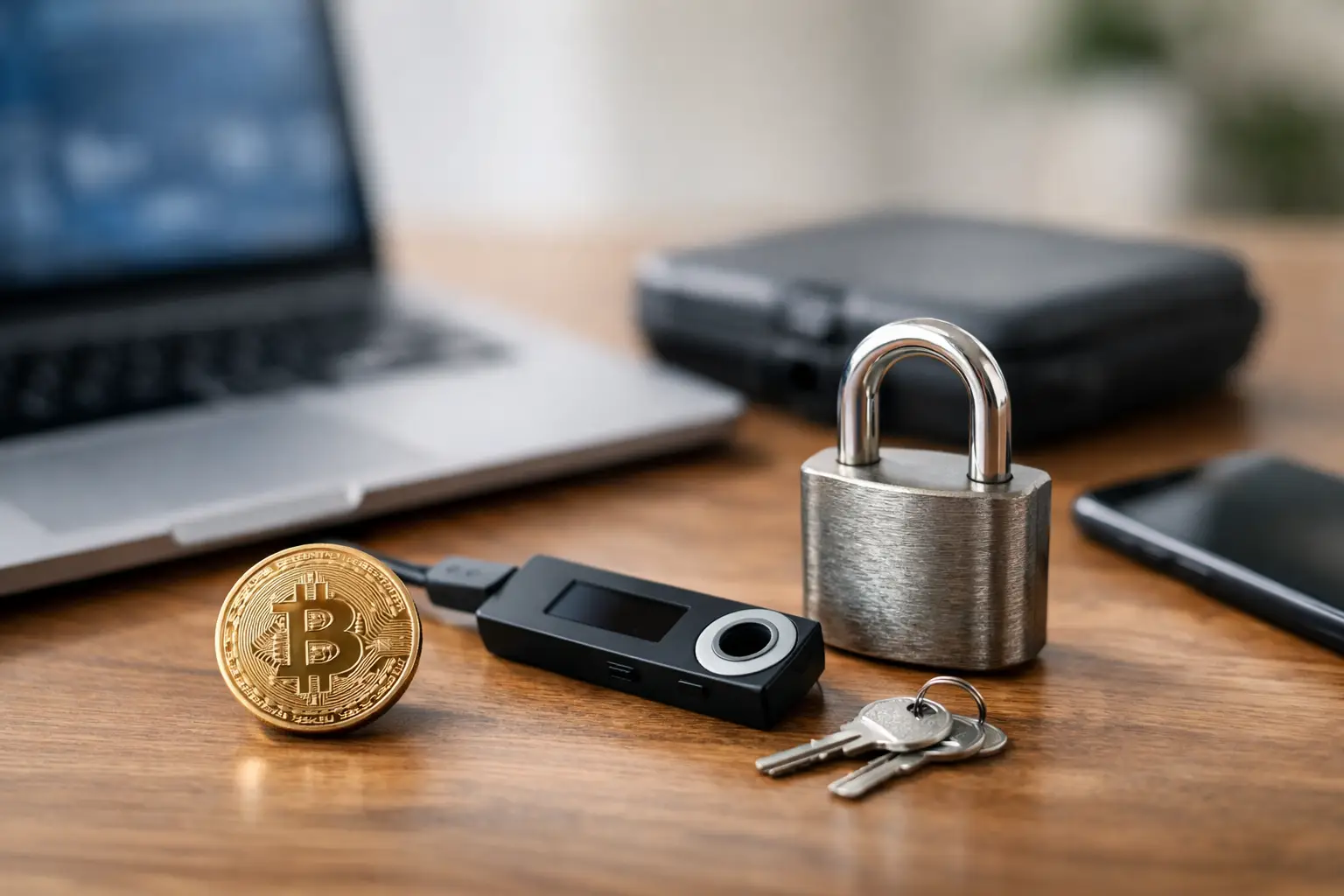
For most Bitcoin holders, a hardware wallet is the best compromise between security and simplicity. This device keeps sensitive elements away from your computer and phone. Even if one of these devices is infected, a transaction cannot be validated without confirmation on the hardware wallet itself.
During the initial setup, the device generates a recovery phrase, usually made up of 12 or 24 words. This phrase is the key to your Bitcoin wealth. It allows you to restore your funds on another device if the wallet is lost, broken, or stolen. The physical wallet is replaceable. The recovery phrase is not.
Write this phrase by hand, in the exact order, on a durable medium. Do not photograph it, do not copy it into your phone notes, do not email it, and do not store it in the cloud. These solutions seem convenient until a day when an account is compromised, a phone is stolen, or automatic sync exposes your data.
Keep the backup in a private, dry place, protected from fire as much as possible. For a significant amount, two copies stored in two separate locations can reduce the risk of physical loss. But each additional copy also increases the risk that someone else could access it. So, limit the number of copies and choose truly secure locations.
You can add a passphrase, sometimes called the 25th word, to your recovery phrase. This is an extra layer of protection, but it’s not for everyone. If you forget it, your funds become inaccessible, even with the 24 words. For beginners, a well-backed-up recovery phrase is often safer than a complex setup that is poorly documented.
Buy and Set Up Without Shortcuts
A hardware wallet should be bought new, ideally from the manufacturer or an official reseller. Avoid second-hand devices, bargain listings, and pre-configured accessories. A device should never arrive with a pre-written recovery phrase. If it does, consider it compromised.
During setup, generate the phrase yourself on the device. Never enter this phrase on a website, in a support app, or in a form sent by message. No legitimate service needs your recovery words. Anyone asking for them is trying to take control of your bitcoins.
Also Secure Your Exchange Account
Even if you transfer most of your BTC to your own wallet, your exchange account remains a sensitive entry point. This is often where you buy your bitcoins and link your personal or banking details.
Start by using a long, unique password stored in a password manager. Reusing the same password for your email, social networks, and crypto platform is like using the same key for your house, car, and office.
Then enable two-factor authentication with a dedicated app rather than SMS. SMS can be hijacked in a SIM swap scam. An authenticator app adds a more reliable barrier. Keep backup codes in a safe place, separate from your phone.
Also enable, if the platform allows, a withdrawal whitelist. It limits withdrawals to Bitcoin addresses you have already authorized. This setting may slow down a one-off withdrawal, but it greatly reduces the damage if someone gets into your account.
The Most Common Scams Don’t Break the Technology
Most losses don’t come from a hacker “breaking Bitcoin.” They come from a fake email, misleading ad, fake advisor, or a mistake made in a rush. Scammers are less interested in attacking your wallet than in convincing you to give them access.
Beware of messages announcing a security problem, a refund, urgent verification, or a prize to claim. They often mimic the name and look of a known platform. Don’t open a link received by email or message to log into your account. Use your saved bookmark or type the service address yourself.
Never share your recovery phrase, validation codes, or wallet contents with anyone who contacts you. Neither customer support, nor an influencer, nor a so-called tax expert needs this information. Promises of guaranteed returns, miraculous recovery, or doubling your BTC are immediate red flags.
Before each transfer, verify the destination address directly on your hardware wallet’s screen. Some malware replaces the address copied to your clipboard. For a first transfer or a new address, send a small test amount. Wait for its receipt, then make the main transfer. This step takes a few minutes and can prevent an irreversible mistake.
Build a Simple Routine Rather Than a Fragile Fortress
Security works when it fits into your daily life. If your method is too complicated, you risk bypassing your own rules when you’re in a hurry. A short, stable routine is better than a pile of tools you don’t master.
Take an hour to check your setup: readable and complete recovery phrase, location known only to you or designated people, strong PIN code, two-factor authentication active on the platform, and a clear transfer procedure. Also review after changing your phone, moving, or separating, as these moments often create practical gaps.
Also think about inheritance. If you have a significant amount in Bitcoin, a trusted person should know that a system exists and how to find instructions in case of an accident. It’s not about sharing your recovery phrase today. It’s about making sure your bitcoins don’t become inaccessible to your loved ones tomorrow. A notary or suitable estate plan can help depending on your situation.
The security of your bitcoins and tracking your strategy are two different but complementary topics. A tool like Yapuka Holder can help you filter out market noise and stick to a long-term vision. It doesn’t replace your responsibility for your keys: the fewer impulsive moves you make, the fewer chances you have to make mistakes.
Your next step doesn’t need to be spectacular. Just check where your recovery phrase is, enable two-factor authentication if you haven’t already, and write down your transfer procedure. A few clear rules give you more control than constantly watching the price.