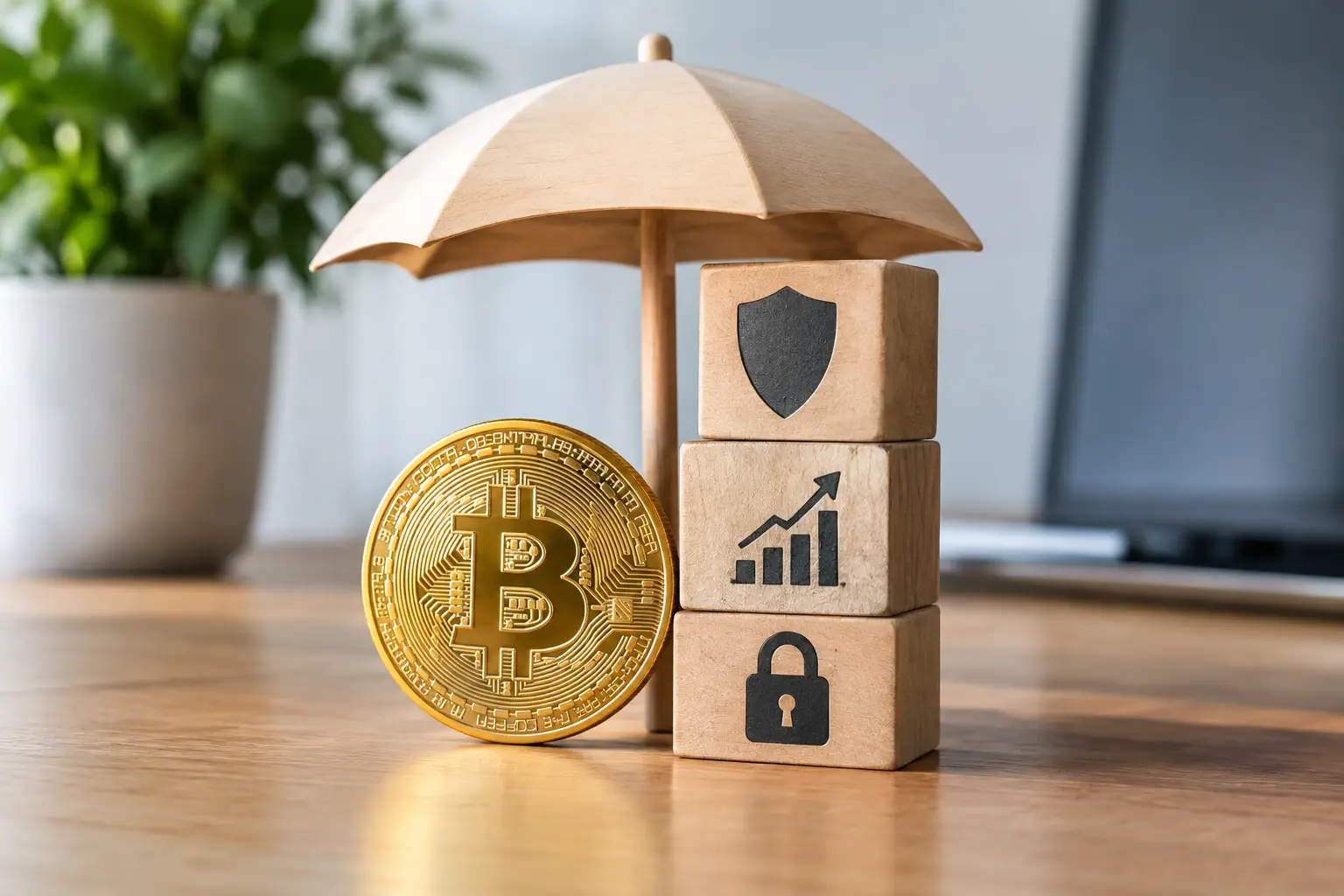
A Bitcoin drop of 15% in a few days can make even a convinced investor doubt. Wondering how to reduce Bitcoin risk is not about seeking an investment without volatility. It’s about building a framework that prevents you from making decisions in a rush, overinvesting at the wrong time, or selling out of fear.
For a long-term holder, risk doesn’t just come from the price. It also comes from security mistakes, an oversized allocation, conflicting information, and a lack of simple rules. The good news: you don’t need to become a trader or watch charts all day to manage it better.
Bitcoin Risk Is Not Just About Price
Bitcoin is volatile. This reality doesn’t disappear with a better app or a new forecast. A serious strategy starts by accepting that strong price swings are possible, even after your purchase.
The real problem appears when this volatility pushes you to act against your plan. Buying after a spectacular rise out of fear of missing out, then selling during a drop because the scenario feels uncomfortable, is often more costly than the drop itself.
It’s also important to distinguish between several risks. Market risk concerns the value of your portfolio. Concentration risk is about the share of Bitcoin in your wealth. Operational risk covers keeping your access safe, transfer errors, and scams. Finally, informational risk arises when you make decisions based on alarming headlines or unverified advice.
Reducing risk means reducing your exposure to these mistakes. It doesn’t promise returns or guarantee you can predict the next market move.
Set an Allocation You Can Truly Handle
The most useful decision isn’t finding the perfect entry point. It’s determining how much you can allocate to Bitcoin without endangering your plans, your emergency savings, or your peace of mind.
Ask yourself directly: if the value of this position were cut in half for several months, could you stick to your plan without having to sell? If the answer is no, your exposure is probably too high. A reasonable allocation depends on your income, debts, time horizon, and personal tolerance for downturns. There is no universal percentage.
Keep separate the money needed for daily expenses, an emergency fund, and your Bitcoin investment. This separation is simple, but it prevents a temporary drop from becoming a real cash flow problem.
For entrepreneurs, plumbers, electricians, landscapers, mechanics, hairdressers, or beauticians, the rule is the same: the capital needed to run your business, pay expenses, or get through a slow month should not depend on the price of Bitcoin. Long-term investing starts by protecting what you need in the short term.
Choose a Regular Buying Schedule Instead of a Single Bet
Investing a fixed amount at regular intervals can reduce the risk of investing everything just before a correction. This approach, often called dollar-cost averaging, doesn’t guarantee better returns. However, it simplifies decision-making and limits the pressure of timing.
For example, instead of trying to pick the “right” day to buy each month, you can set an amount that fits your budget and invest it on a clear schedule. This way, you avoid letting your purchases be swayed by emotions or online comments.
This method isn’t suitable for every situation. If you already have a large sum, deploying it gradually may reassure you, but it could also make you miss out on a rally. The right choice is the one you can stick to, not the one that looks perfect in hindsight.
How to Reduce Bitcoin Risk With Written Rules
A mental plan quickly becomes blurry when the market gets turbulent. A few written rules on a page are enough to regain control. They can specify your investment horizon, the maximum amount you want to allocate, your buying frequency, and situations in which you’ll reassess your strategy.
Add a useful rule: never make major decisions on the day of a big rise or drop. Give yourself 24 or 48 hours. This delay reduces impulsive reactions and gives you time to check the facts.
Your plan can also include rebalancing. If a Bitcoin rally increases its share from 10% to 25% of your investable wealth, you can decide in advance to bring this exposure back to your target. Conversely, if a drop significantly changes your allocation, you’ll know whether you want to keep your buying schedule or pause it temporarily. Rebalancing isn’t about guessing the top or bottom. It’s about not letting a position take up more space than you intended.
Secure Your Bitcoins Before Chasing Higher Returns
Poor storage can ruin a good strategy. Promises of returns, fake tech support, and fraudulent links regularly target crypto holders. Here, saving time should never mean skipping essential checks.
Use unique passwords and two-factor authentication. Keep your recovery phrase offline, in a safe place, and never share it. Always double-check the recipient’s address before a transfer. For large amounts, do a test send first.
If you choose self-custody, understand your responsibility: losing your recovery phrase can mean losing access to your bitcoins. If you use a third party, you also need to assess their reliability and accept the risk of third-party custody. There is no perfect solution, only a compromise to choose consciously based on your comfort level and skills.
Filter Information Instead of Following the Noise
The Bitcoin market produces a constant stream of predictions. Some are relevant, many are just designed to grab attention. Following every alert may feel like being informed, but it mostly increases mental load.
For a long-term investor, a few indicators and questions matter more than the endless flow on social media: does your allocation still match your plan? Has your time horizon changed? Is your financial situation different? Do major market trends confirm or weaken your initial conviction?
Artificial intelligence can help sort through this. Its role isn’t to predict Bitcoin’s next price or decide for you. It helps centralize useful data, summarize trends, and flag changes that truly deserve your attention. With Yapuka Holder, the goal is precisely to spend less time comparing sources and more time checking if your strategy still makes sense.
Measure Your Success by More Than Just Today’s Price
Focusing only on daily performance fuels anxiety. More useful tracking also measures your consistency: did you stick to your budget, maintain your chosen allocation, and keep your access secure? These are under your control. The daily price is not.
Record your purchases, your average price, your Bitcoin share in your portfolio, and the reasons for your major decisions. After a few months, this journal often reveals invisible habits: buying too quickly after a rise, stopping during drops, or having more exposure than you thought.
A good tracking system should stay simple. If your method requires an hour of analysis every night, it will be hard to maintain. A monthly or quarterly check-in, plus alerts for major changes, often suits a HODL approach better.
Bitcoin risk doesn’t disappear. However, controlled allocation, consistent buying, serious security, and simple tracking change how you experience it. The best plan is the one that lets you sleep well while staying aligned with your long-term horizon.