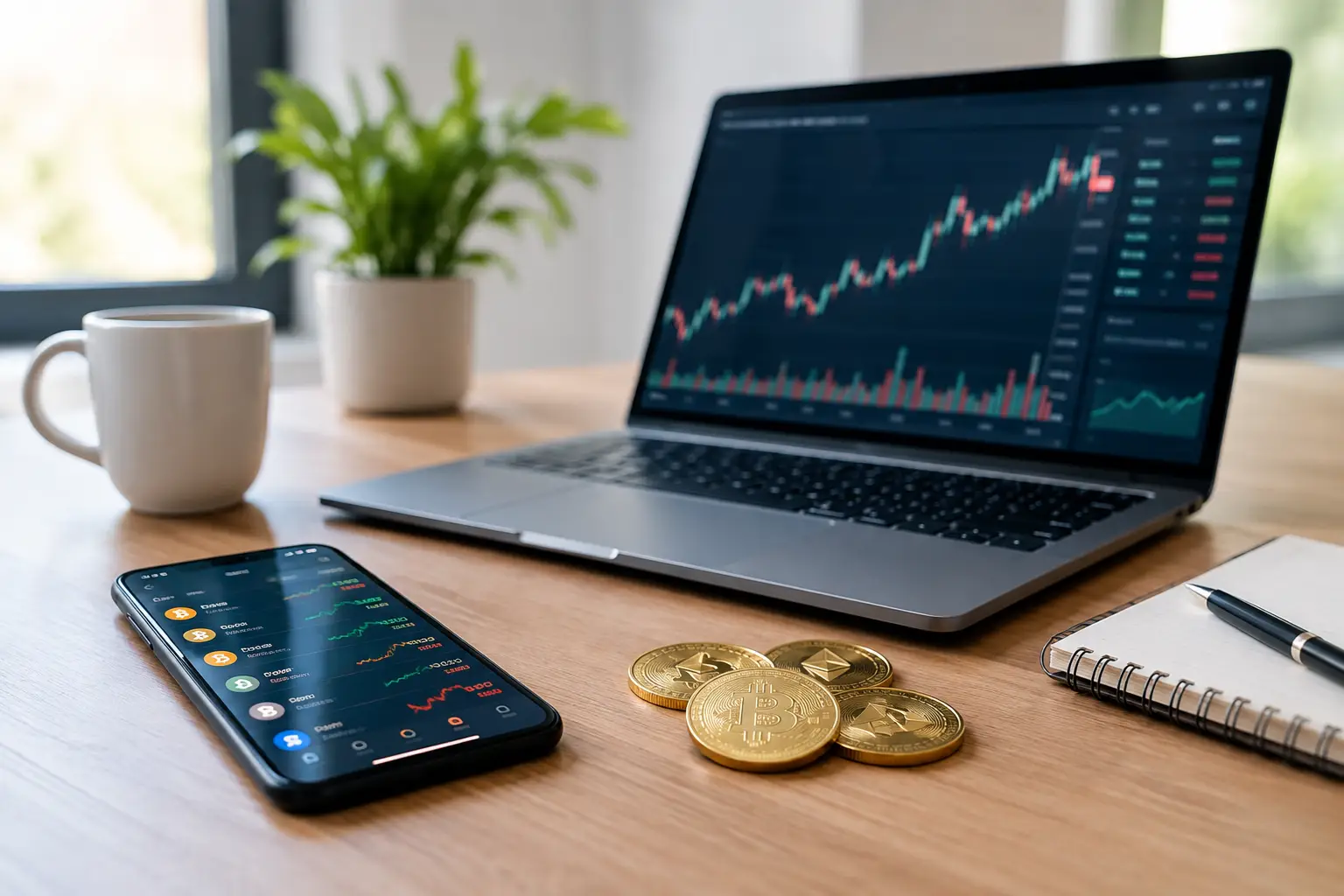
The problem for a beginner Bitcoin investor isn’t a lack of information. It’s the opposite: charts, price alerts, videos, anxiety-inducing posts, and conflicting numbers come from everywhere. Beginner crypto tracking tools must do one thing above all: help you see what matters, without making you feel like you need to become a market analyst.
If your goal is to hold Bitcoin for several years, you don’t need to monitor every price change. You need a simple system to know where you stand, understand what’s really moving, and stay consistent with your strategy. A good tool doesn’t push you to act more often. It helps you make fewer bad decisions driven by emotion.
Why Tracking Bitcoin Quickly Becomes Exhausting
Bitcoin operates 24/7. This constant availability creates an expensive reflex: checking your portfolio every time a notification pops up, then searching for an explanation for every rise or fall. After a few weeks, many beginners confuse tracking with obsessive monitoring.
For a long-term investor, this habit rarely brings more clarity. A daily 3% move can seem huge, even though it changes nothing for a strategy built over five or ten years. The real risk isn’t missing a piece of information. It’s reacting to information that doesn’t deserve action.
This is even truer when investing has to fit into an already busy life. A plumber between jobs, an electrician managing quotes, a landscaper in peak season, a mechanic, a hairdresser, a beautician, or a renovation entrepreneur doesn’t need to add ten screens to their day. They need a few reliable markers, checkable in a few minutes.
The Best Beginner Crypto Tracking Tools
A good starting point is to distinguish tools by the problem they solve. It’s not about using everything, but about choosing what directly serves your investment method.
A Portfolio Tracker to Know Your Real Position
The first useful tool answers a simple question: how much Bitcoin do you own, what is its current value, and what is your average purchase price? Without this overview, it’s easy to multiply purchases without knowing how much of your savings is truly exposed to Bitcoin.
A portfolio tracker can centralize purchases made on different platforms or in different wallets. For a beginner, the point isn’t to calculate every tax detail daily. It’s to clearly visualize the invested amount, overall performance, and Bitcoin’s place in your assets.
Be cautious with automatic connections. They’re convenient, but require you to understand what permissions you’re granting. Never share your recovery phrase, private keys, or password with a tracking tool. A reputable service may read some public data or connect via limited authorization, but it should never be able to move your funds.
Limited and Useful Price Alerts
Alerts are useful if they serve a specific scenario. For example, you can be notified when Bitcoin reaches a level where you planned to buy gradually, or when it crosses a threshold that prompts you to review your portfolio balance.
On the other hand, getting an alert for every 1% move won’t help you invest better. It will train you to watch the price more often and feel every drop as an emergency. Set few alerts, then turn off those that don’t lead to a clear decision.
Trend Analysis Instead of a News Feed
Crypto news is fast, emotional, and often repetitive. The same event can be presented as a disaster in the morning and as an opportunity in the evening. A beginner shouldn’t try to read everything that gets published.
Instead, look for a tool that summarizes what matters for a long-term view: price evolution in its cycle, general market behavior, macroeconomic trends, and perceived risk level. This approach doesn’t predict the future. It helps you avoid mistaking temporary noise for a fundamental change.
This is where artificial intelligence can be useful: not to promise the next Bitcoin price, but to filter scattered information and translate it into readable markers. Yapuka Holder follows this logic by gathering market and cycle data to give a more structured view to investors who want to stick to their plan without spending their evenings on it.
What a Beginner Should Track Each Month
You don’t need a dashboard full of indicators. A monthly routine is often enough to stay in control. Start with your allocation: what portion of your total savings is placed in Bitcoin? This answer matters more than the color of today’s chart.
Next, look at your average purchase price and the amount you can still invest without endangering your budget. If you use a regular buying strategy, simply check that it remains compatible with your income, emergency savings, and short-term plans.
Finally, take a few minutes to put the market in a broader trend. Bitcoin regularly goes through phases of euphoria and discouragement. Seeing this volatility as normal doesn’t make drops pleasant, but it reduces the risk of panic selling or buying too aggressively after a quick rise.
Tracking becomes effective when each data point answers a concrete question: am I still within the limits I set for myself? Is my investment still suited to my situation? Do I have a rational reason to change my plan? If the answer is no, doing nothing is often a valid decision.
Common Mistakes with Crypto Tools
The first mistake is collecting apps. One platform for price, another for charts, a third for news, a fourth for alerts: in the end, you have more notifications, not more understanding. Start with a properly tracked portfolio and a reliable summary source.
The second mistake is believing that an indicator decides for you. No chart, AI, or alert can determine your risk tolerance, cash needs, or personal time horizon. Tools are there to inform your decision, not replace it.
The third mistake is ignoring security for convenience. Portfolio tracking is useful, but keeping your bitcoins safe is a different matter. Keep your access protected, enable two-factor authentication when possible, and never rush after a message mentioning an emergency or guaranteed gain.
Finally, avoid measuring your success solely by today’s displayed value. If you’re investing for the long term, your discipline, consistency, and respect for your allocation matter more than a performance visible over a week.
Setting Up a Simple Routine in 15 Minutes
Start by noting your goal: building a long-term Bitcoin position, diversifying part of your savings, or learning gradually. This goal will determine what you need to track and, most importantly, what you can ignore.
Next, choose a single place to record your purchases and view your overall position. Add your invested amount, your Bitcoin quantity, and your average purchase price. If you hold assets on multiple platforms, centralize only the necessary information without sharing sensitive data.
Then set a realistic check-in schedule. For most long-term holders, a light weekly check and a monthly review are more than enough. Turn off alerts that prompt you to check the market without reason.
End each review with a simple question: “Is my plan changing for an objective reason?” If you can’t clearly explain why, stick to your strategy. This rule protects against two very human reflexes: buying out of fear of missing a rise and selling to make the discomfort of a drop disappear.
The best tracking tools aren’t those that display the most numbers. They’re the ones that let you close the app with a clear idea of your situation and get back to your priorities. To invest in Bitcoin with peace of mind, look for less noise, more context, and a routine you can actually stick to over time.