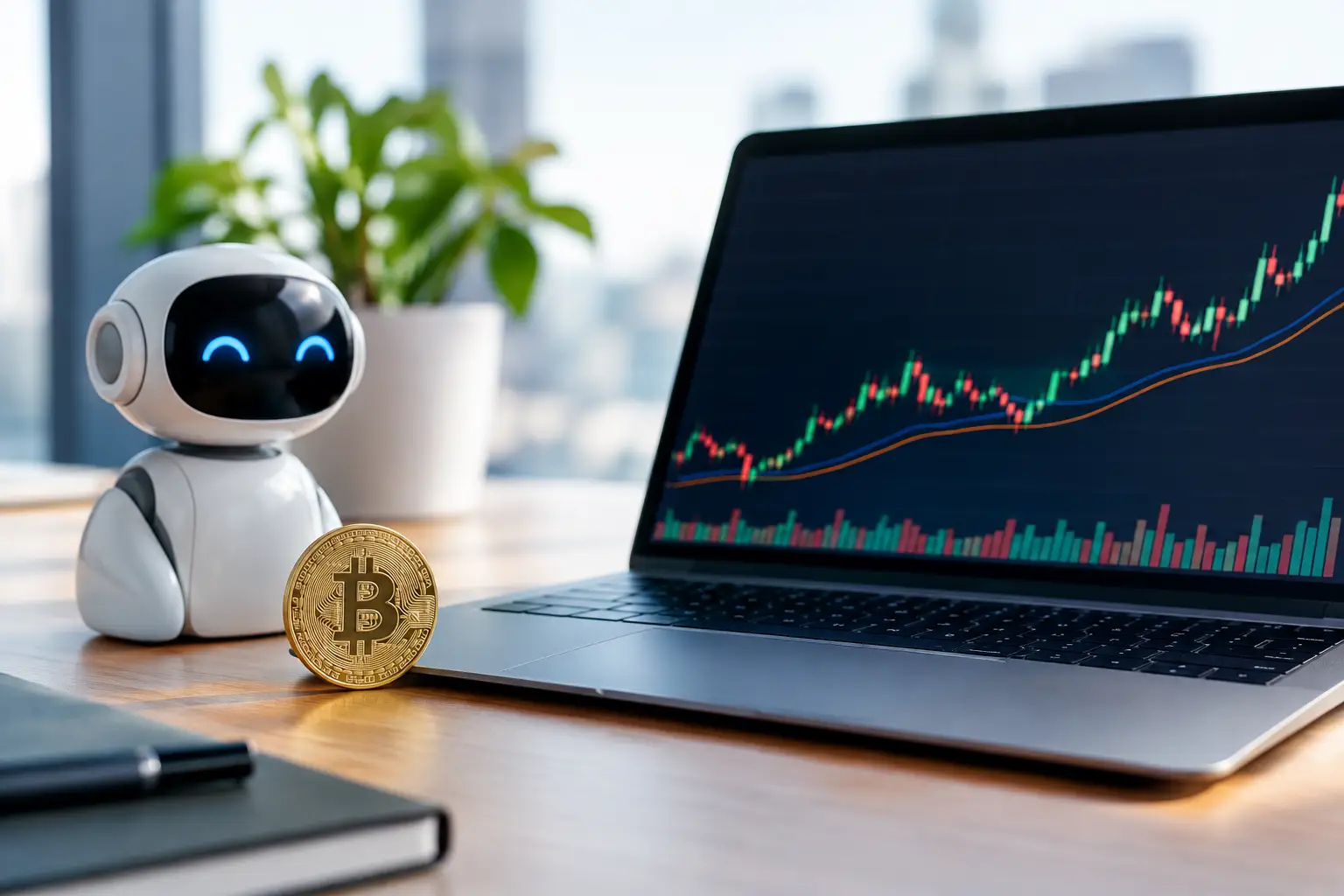
Bitcoin can lose or gain several percent while you are in a meeting, on a job site or simply away from your phone. Automated bitcoin analysis is not there to make you react to every move. It is there to sort things out, put the signals back in their context and help you follow your strategy without spending your evenings on ten charts and fifty posts.
For a long-term investor, the problem is not a lack of information. It is too much information. Live prices, economic announcements, on-chain indicators, anxiety-inducing comments and contradictory predictions create a feeling of permanent urgency. Yet a solid Bitcoin strategy often calls for the opposite: method, perspective and consistent decisions.
Why automate your Bitcoin analysis?
Following the market manually takes time and quickly becomes tiring. You open an app to look at the price, then you check social media, then you try to understand a drop. An hour later, you have read a lot, but you still do not know whether your plan should really change.
An automated analysis gathers the useful information, tracks how it evolves and presents it in understandable language. Instead of watching every variation, you receive a structured reading: is the market moving in a historically high or low zone? Are long-term holders accumulating or selling? Is the macroeconomic context becoming more favorable or more tense?
The goal is not to predict the exact price of Bitcoin tomorrow. Nobody does that reliably. The goal is to make better decisions with the elements available, without letting an emotion of the moment run your portfolio.
What automated bitcoin analysis can really do
Automation is useful when it eliminates repetitive tasks, not when it pushes you to trade more often. For a BTC holder, it can follow the price, cycle trends, network data, the market risk level and the allocation of your portfolio.
It can also compare the current situation with past periods. For example, if the market shows a strong rise after several months of accumulation, the tool can indicate that euphoria is increasing and that the risk of a correction deserves your attention. That does not mean “sell immediately”. It means you have a signal to check your allocation and get back to your rules.
A platform like Ya.puka Holder can centralize this reading. You do not need to know the formulas behind each indicator. What matters is understanding what it suggests, what it cannot guarantee and the reasonable action you can consider.
Turning complex data into simple questions
Good tools do not drown you in acronyms. They answer concrete questions:
- Does my Bitcoin exposure still match my goal?
- Does the market seem calm, tense or euphoric?
- Is it time to continue my regular investing or to reassess my pace?
- Which macroeconomic events may create more volatility?
- Is my decision based on my plan or on the fear of missing a rise?
These answers do not replace your judgment. They make that judgment faster and better informed.
The signals to follow without becoming an analyst
A useful analysis is based on a few complementary families of data. Price matters, but it is not enough. A high price can keep rising, just as a falling price can keep falling. Looking only at the chart often encourages impulsive decisions.
Cycle data lets you place the market in a broader perspective. Bitcoin goes through phases of accumulation, progression, euphoria and pullback. These cycles never repeat identically, but they give a framework to avoid confusing a daily variation with a major trend change.
Data related to the behavior of holders gives another perspective. When long-term investors keep their bitcoins despite a drop, the signal is different from a period when many holders are distributing their positions. Again, this is not a buy or sell button. It is context information.
Finally, the macroeconomic framework influences liquidity and risk appetite. Interest rates, inflation, monetary policy and economic tensions can weigh on Bitcoin in the short term. An automated analysis can remind you of these elements without forcing you to follow financial news all day long.
Automating without losing control
The idea that an artificial intelligence decides in your place can be worrying. For a long-term strategy, that is not what you should look for anyway. You remain responsible for your capital, your horizon and your level of risk.
AI is more useful as a reading assistant than as an autopilot. It observes, compares, alerts and summarizes. You decide. This distinction is essential, especially on a volatile asset like Bitcoin.
A good system should let you choose the frequency of alerts and the information that matters to you. If you invest every month, daily price tracking can be pointless, even counterproductive. A weekly or monthly check-in, with alerts only when there is a notable change, will often be more suitable.
Automation must reduce your mental load. If it sends you twenty notifications a day or makes you doubt your plan every morning, it adds noise instead of removing it.
A simple method to use alerts
Before activating alerts, define what you want to monitor. Start with your goal: building a Bitcoin position over five years, preserving a given allocation in your assets, or investing gradually without trying to catch the perfect low.
Then choose two or three really useful triggers. You can track a significant change in your allocation, a change in market regime or the approach of a historically high risk zone. Avoid alerts on every small price swing. They attract your attention without improving your decision.
Finally, link each alert to a planned action. If your Bitcoin allocation exceeds the ceiling you set yourself, you may rebalance a part of it. If the indicators show a strong phase of fear but your financial situation has not changed, you simply continue with your gradual investment plan. An alert without a decision rule often ends in pointless stress.
A solution suited to very busy investors
This approach is particularly suitable for people who do not want to become traders. A plumber between two jobs, an electrician on site, a landscaper in the middle of the season, a mechanic, a hairdresser, a beautician or a renovation contractor do not need to add technical analysis to their already full days.
Above all, they need to know whether their strategy remains consistent and whether something really deserves their attention. Ten minutes to read a clear summary are worth more than an hour spent going through opposing opinions.
This is also true for beginners. Automation does not make Bitcoin risk-free, and it does not turn a bad decision into a good one. However, it avoids starting with a method based solely on emotions, rumors or alarmist messages.
The limits to keep in mind
No indicator predicts the future. Historical data helps understand probabilities, not obtain certainties. An unforeseen event, a liquidity crisis or a political decision can quickly change the market.
You also need to distinguish a market alert from personalized financial advice. Your ability to accept a drop, your investment horizon and your personal situation remain decisive. Money invested in Bitcoin must be compatible with your level of risk and your liquidity needs.
The best automated analysis is therefore the one that makes you more disciplined, not more dependent on a screen. It must help you check your strategy, limit hasty decisions and keep a long-term view when the news gets noisy.
The real gain is not receiving more signals. It is knowing which ones deserve your attention, then being able to close the app and get back to your day with a clear plan.