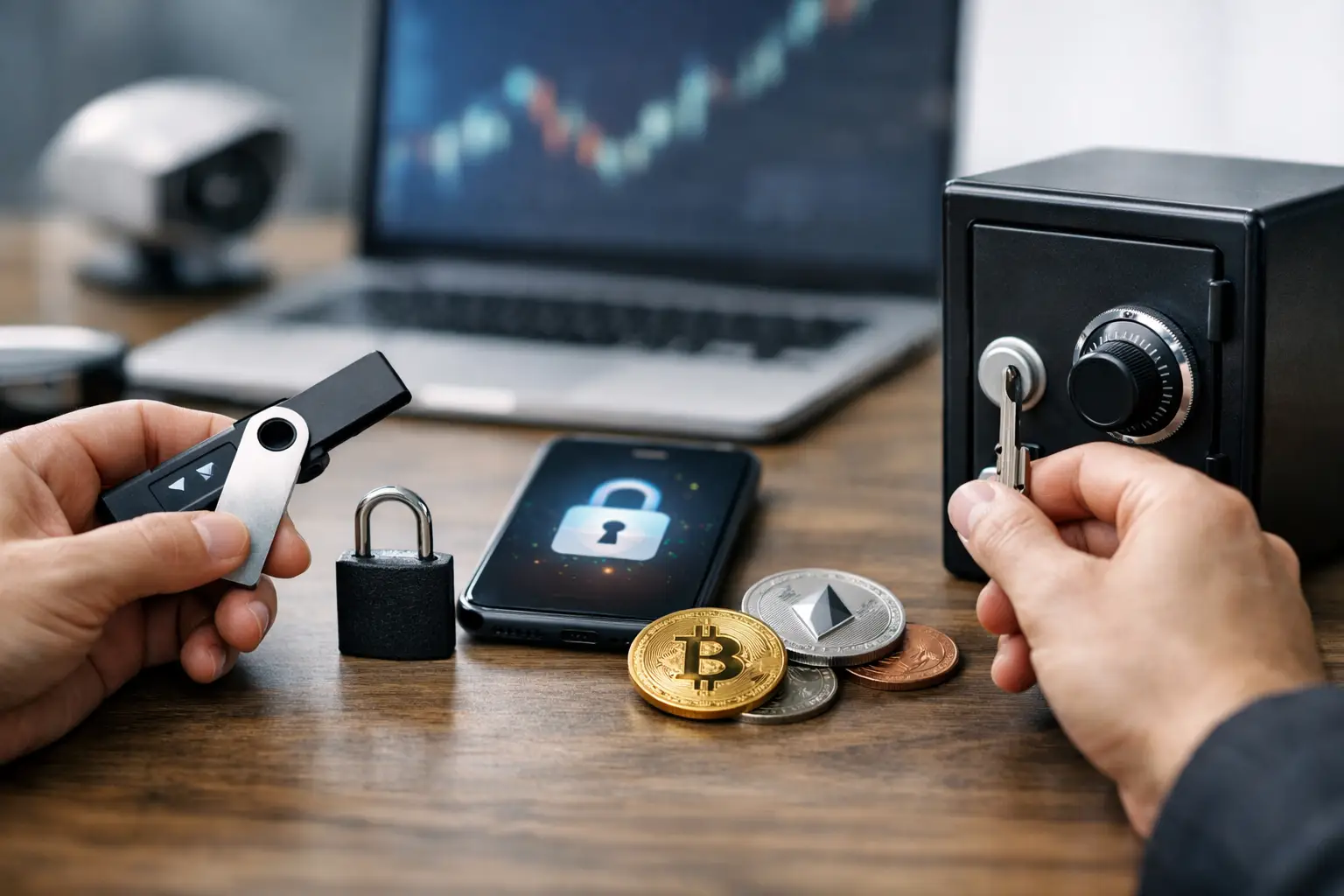
A cryptocurrency can rise, stagnate, or fall, but it cannot be recovered by customer service if you have given your recovery phrase to a scammer. Securing your cryptocurrencies is therefore not just about choosing the right asset: it also means organizing access to your funds, limiting human error, and recognizing manipulation attempts.
For individual investors, the topic can sometimes seem technical. Yet, it is based on a simple idea: whoever controls the private keys controls the assets. The goal is not to live in fear or to multiply unnecessary precautions. It is about choosing a security level consistent with the amount invested, your usage frequency, and your ability to follow a clear procedure.
1. Understand What a Wallet Really Protects
A cryptocurrency is not “in” a wallet like bills in a safe. It is recorded on a blockchain. The wallet stores or allows the use of cryptographic elements that authorize transactions: the private key and, most often, the recovery phrase, also called the seed phrase.
This phrase, usually made up of 12 or 24 words, is the master key to your wallet. Anyone who has it can restore the wallet on another device and move the funds. Neither a reputable platform, nor a wallet manufacturer, nor a so-called technical support member will ever ask you for it.
The distinction between custodial and non-custodial wallets is essential. On an exchange platform, the company usually holds the private keys for you. This is convenient for buying, selling, or trading quickly, but you depend on its security and rules. With a non-custodial wallet, you hold the keys: you gain autonomy, but the responsibility for backup is entirely yours.
2. Choose the Right Storage Level
There is no perfect solution for every use. An investor holding a position for several years does not have the same needs as an active trader. Keeping all your assets on a platform can simplify operations but increases your exposure to third-party risk. Conversely, transferring small amounts to a hardware wallet may be disproportionate if network fees are high.
For significant amounts or those intended to be held long-term, a hardware wallet is often a relevant option. It stores the keys in a dedicated device and signs transactions without directly exposing the private key to the computer. This reduces the risk from malware, though it does not eliminate phishing or validation error risks.
A software wallet may be suitable for everyday use, provided you protect your phone or computer, download the app from an official source, and do not keep more than you are willing to use. Splitting between a long-term reserve and a wallet dedicated to transactions often brings more clarity.
3. Back Up the Seed Phrase Offline
The most important habit is also the least spectacular: write down the recovery phrase offline, accurately, and keep it in a safe place. A photo, a note on your phone, a cloud document, or an email are vulnerable to hacking, accidental syncing, and data leaks.
Write the words in the exact order, on a durable medium. Calmly check the spelling and order before depositing significant amounts into the wallet. A poorly transcribed backup can be as problematic as no backup at all.
Avoid making multiple copies without a strategy. Two copies kept in separate locations can limit the risk of physical loss, for example after water damage or a fire. However, each additional copy increases the risk of unauthorized access. The right balance depends on your family, financial, and geographic situation.
4. Enable Strong Protections on Platforms
If you use a centralized platform, secure the account with the same rigor as a bank account, or even more. A unique and long password is the minimum. A password manager allows you to create complex credentials without having to memorize them.
Then enable two-factor authentication. An authenticator app is generally preferable to SMS codes, which can be vulnerable to number hijacking. Store the recovery codes for this app securely: losing access to your second factor can become a major issue.
Security settings deserve regular checks. When the platform offers it, enable a withdrawal whitelist, enhanced withdrawal confirmation, and login alerts. These mechanisms do not make an account unbreakable, but they add extra steps that can prevent or reveal fraudulent actions.
5. Protect Yourself from Phishing, Not Just Hacking
The majority of losses do not come from sophisticated cyberattacks. They often start with a fake email, a misleading ad, a private message on social media, or a site that perfectly mimics a known interface. The scammer is less interested in breaking your security than in convincing you to open it yourself.
Be especially wary of urgent requests: supposedly compromised wallet, airdrop to claim immediately, unsolicited support contacting you, guaranteed returns, or the need to “synchronize” your wallet. The wording changes, but the mechanism remains the same: create pressure to stop you from checking.
Type the service address yourself or use a previously verified bookmark. Before signing a transaction, reread what your wallet displays. A signature can sometimes grant an app the right to spend certain tokens. If you do not understand the requested permission, it is better to stop and check than to approve by reflex.
6. Test Every Operation Before a Major Transfer
Blockchain transactions are largely irreversible. An address, network, or deposit type error can make fund recovery very complicated, if possible at all. For a first transfer to a new address, send a small test amount. Wait for confirmation, check receipt, then make the main transfer.
Also check the network used. Some assets exist on multiple blockchains, and the same address can technically be compatible with several networks, even if the destination service does not necessarily support the one you chose. Do not rely only on the first and last characters of the address: malware capable of replacing a copied address exists. Compare the full address, ideally on your hardware wallet’s screen.
This method may seem slow, especially in a market where everything seems to move fast. However, a few minutes of checking usually cost less than a transaction sent to the wrong place.
7. Create a Simple Security Routine
Security works best when it becomes a habit. Once a quarter, you can check that your recovery phrase is still readable, that your two-factor authentication works, and that your devices are up to date. There is no need to restore your wallet each time: the idea is to check your procedures, not to handle your keys without reason.
Separate uses as much as possible. A device or browser profile dedicated to financial operations limits unnecessary extensions, forgotten sessions, and risky downloads. Do not publicly share the amount of your holdings or details of your storage setup. Discretion reduces exposure to targeting attempts.
Finally, plan for the unexpected. If you are the only one who knows about and can access your assets, prolonged unavailability can complicate passing them on to your loved ones. The solution should remain proportionate and legally appropriate: documenting the existence of the assets without exposing the seed phrase can already be a thoughtful first step.
Securing Your Cryptocurrencies Also Means Making Better Decisions
Security is not a one-time action to check off after a purchase. It is a framework that prevents emotion, haste, or misleading information from dictating your actions. The simpler your organization, the more consistently it will be applied.
An AI or automated tool can support this discipline by centralizing your alerts, helping to spot unusual movements, analyzing market data, and reducing the mental load of tracking your positions. It does not replace prudent key storage or your judgment. However, it can help you make clearer decisions, with more method and fewer impulsive reactions.